

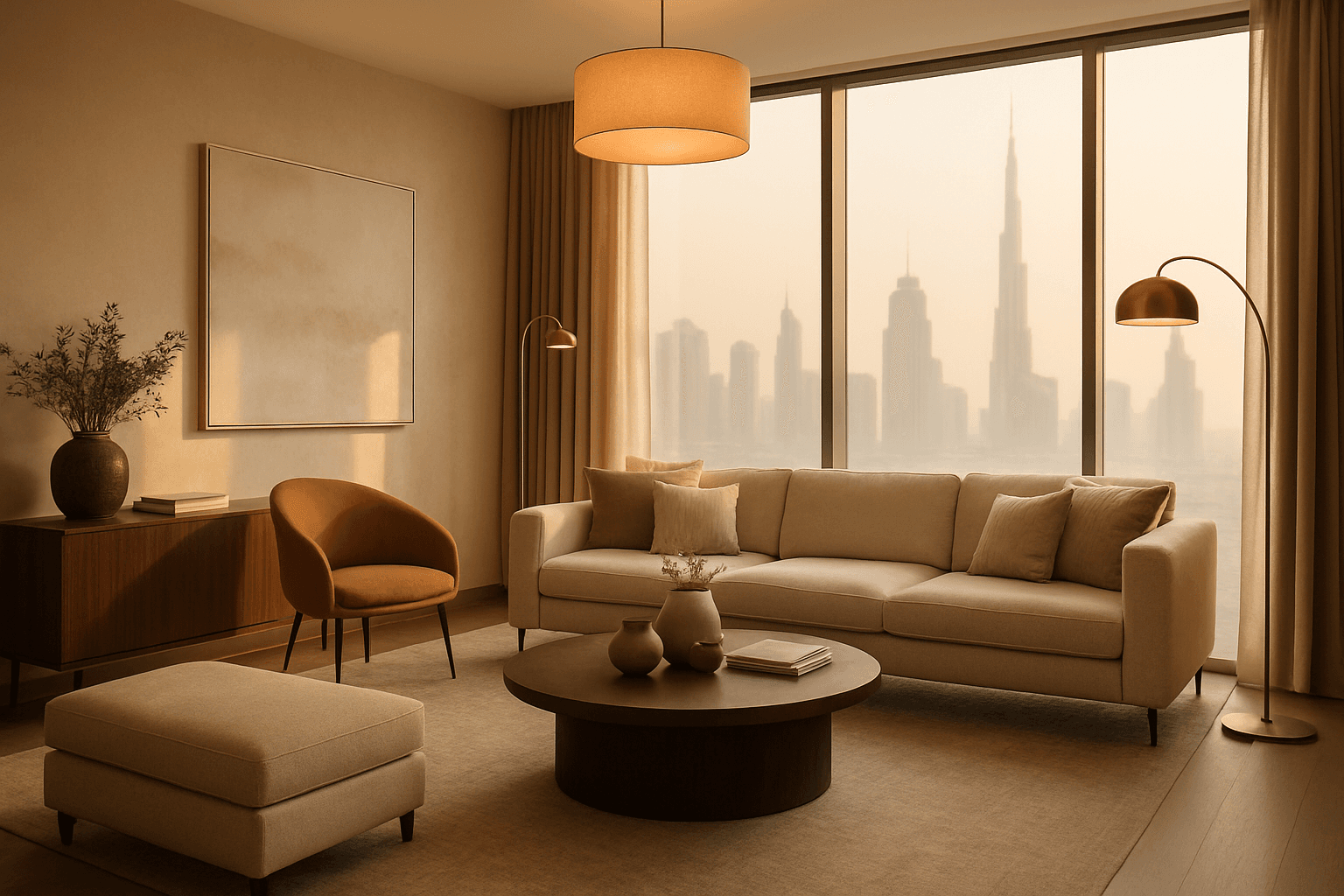
You can already picture it. The villa that finally looks like the ones you save on Instagram. The apartment that makes visitors go quiet when they walk in. A home that feels designed, not just furnished.
Then you Google "best interior design companies in Dubai" — and every list tells you something different.
One page crowns a firm as "number one." The next page crowns a completely different firm as "number one." A "top 10" ranks the company that wrote the article at position one. And not a single one of them will tell you the number you actually need: what it costs, and how to tell a real designer from an expensive mistake.
Here's the truth nobody selling you a fit-out wants in writing: the company at the top of a "best of" list isn't the best — it's the one that paid, ranked, or advertised the hardest. That doesn't protect your home or your money. A checklist does.
This guide gives you the two things every other page hides: honest 2026 AED prices, and a way to verify a Dubai interior design company before you hand over a single dirham — not a list of names you're told to trust, but the criteria that separate the real designers from the deposit-takers.
First, know what you're actually hiring for
"Interior design" in Dubai covers several very different jobs, and the wrong company for your job is where money disappears. Before you call anyone, place yourself in one of these:
- Interior decoration — furniture, colour, styling, soft furnishings. No building work. The lightest and cheapest scope.
- Design-only — a designer produces the concept, 3D visuals, mood boards, drawings and material specs. You (or a separate contractor) build it.
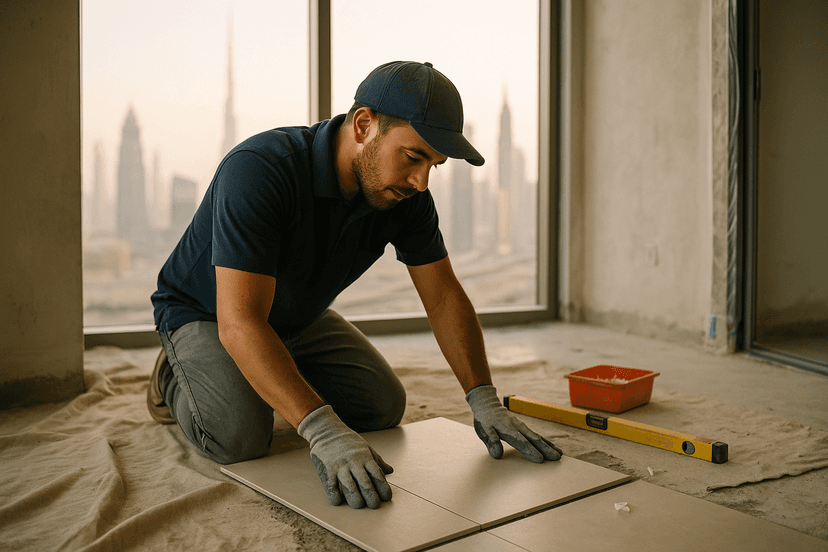
- Fit-out — the physical build: joinery, flooring, ceilings, MEP (mechanical, electrical, plumbing), painting, installation.
- Turnkey (design + fit-out) — one company handles everything from first sketch to handing you the keys. Most homeowners want this.
- Commercial / office interior design — offices, retail, hospitality; different rules, permits and finishes than a home.
Know your scope before the first call. It's the single fastest way to stop a firm from selling you a "luxury turnkey transformation" when you asked to redesign one living room.
How much do interior designers charge in Dubai? Real 2026 AED prices
Almost no design studio in Dubai publishes prices. That's not an accident — vague pricing is how a quote quietly grows once you're emotionally committed. So here are honest 2026 market ranges across Dubai and the wider UAE. Treat them as planning figures. Your real number comes from a proper site visit and a scope, not a phone estimate.
There are three ways designers charge, and you should know all three before anyone quotes you:
- Per square foot — the most common for design and fit-out.
- Percentage of project cost — typically 10–20% of the total build budget for a full design service.
- Fixed fee / per room — common for decoration or a single-room concept.
Interior design & fit-out cost per square foot
Typical project budgets
One number to burn into memory: the finish level swings the price far more than the size of your home does. A 2,000 sq ft apartment can cost AED 80,000 or AED 400,000 for the same footprint — the difference is entirely materials and detailing. That's why any firm that quotes a big number before seeing your space and hearing your finish level is guessing, padding, or both.
For a deeper, room-by-room breakdown, read our companion guide on interior design and fit-out in Dubai — companies, costs and how to choose.
How to identify the best interior design company in Dubai (the checklist)
Forget the rankings. The "best" interior design company in Dubai isn't a name on a list — it's whichever firm passes every one of these before you sign:
- Valid trade licence. Interior design and fit-out work in Dubai requires the right trade licence (and, for build work, approvals to operate in your community or building). Ask to see it. Reputable firms show it without flinching.
- A real, itemised quote. Not "AED 180,000 all-in." A proper scope: rooms, materials, quantities, finishes, and — crucially — what's excluded. Vague quotes exist to grow later.
- A portfolio you can verify. Real photos of real completed projects in the UAE, ideally ones you can trace to a real address or client. Renders alone prove nothing — anyone can buy a pretty 3D.
- Contactable references. Ask for two past clients you can actually speak to. A firm proud of its work will connect you. Silence is the answer.
- A clear design process and timeline in writing. Concept, revisions, approvals, procurement, build, handover — with dates. A design that can't be scheduled is a design that won't be managed.
- A milestone-based payment schedule. Staged payments tied to delivered work — never a huge upfront deposit before you've seen a single drawing. Large "materials advances" are the classic disappearing-contractor move.
- Clarity on permits and building NOCs. Any structural, electrical or plumbing change needs approvals. A serious firm tells you which apply and handles them.
- A workmanship warranty. Good fit-out companies stand behind the build — commonly a one-year warranty on labour and installation.
Red flags that should end the conversation
- Pressure to pay a big deposit "today" to "lock the price" or "hold the designer."
- No written contract, or a quote that refuses to itemise anything.
- A price dramatically below everyone else's — the gap comes back as mid-project "variations."
- A portfolio of only renders and stock images, no verifiable finished projects.
- Reviews that all read identically, or that you can't trace to a real person anywhere independent.
- They dodge questions about licence, permits or references.
For the full first-call script and the exact questions to ask, read our guide to choosing an interior designer in Dubai.
The design rule they'll quote you — and what it really means
You'll hear designers mention the 70/30 rule. It's simple: roughly 70% of a room follows one dominant style, colour or material, and 30% brings in a contrasting secondary element for interest. It's the difference between a room that feels calm and intentional versus one that feels either flat and boring (100/0) or chaotic and busy (50/50). Same logic applies to colour: about 70% a base tone, 30% an accent.
Why does this matter when hiring? Because a designer who can explain why a room works — balance, proportion, a dominant story with a considered contrast — is a designer, not a furniture salesperson. Ask them to walk you through the thinking on a past project. The good ones light up. The pretenders change the subject to price.
What interior designers get paid in Dubai (and why you should care)
People searching for the best firms often also ask what designers earn — and it's a useful sanity check on quotes. In 2026, an employed interior designer in Dubai typically earns a base salary of around AED 5,000 – 10,000 per month, with experienced designers and total packages (including allowances) running higher, into the AED 20,000+ range at senior levels. UAE-wide averages sit in a similar band.
Why this matters to you: when a "designer" quotes a fee that implies they're personally billing far above senior-designer economics for a simple room, you're likely paying for a brand, an office in DIFC, or a middleman's markup — not better design. Honest pricing is tied to scope and finish, not postcode.
The honest shortlist: verified RightPro interior designers
Here's the uncomfortable truth about most Dubai "best interior design companies" lists and directories: the firms pay to appear, and many platforms take a commission on every job they route — so the incentive is volume and whoever pays most, not your outcome.
TaskRight was built to break that. On TaskRight:
- Every interior design and fit-out provider is a verified RightPro — the badge is earned through verification, not bought. You see who's real before you ever talk to them.
- Providers pay zero commission. They keep 100% of every job. So the price they quote isn't padded to feed a platform — and the good ones stay because they're treated fairly, not squeezed.
- You get free quotes and hire direct. No middleman standing between you and your designer, no markup on your project, no games.
Describe your project once — the room, the style, the finish level — and verified designers compete for your job with real quotes. You compare, you choose, you deal directly. The homeowner who does this doesn't just save money; they skip the exact trap that leaves people with a big deposit gone, a "designer" who stopped answering, and a home still stuck in renders.
The alternative is calling names off a "top 10" you can't verify, hoping the reviews are real, and finding out the hard way. That's the expensive way to save an afternoon.
Get free quotes from verified interior designers in Dubai — and start comparing real prices from RightPro providers today.
👉 Find verified interior designers in Dubai →
Frequently asked questions about interior design companies in Dubai
What is the best interior design company in Dubai?
There's no single "best" firm — the best company for you is the one that passes verification: a valid trade licence, an itemised written quote, a verifiable portfolio of completed UAE projects, contactable references, milestone-based payments and a workmanship warranty. Rankings on "top 10" lists usually reflect who paid or advertised, not who does the best work. On TaskRight you can compare verified RightPro interior designers and hire direct, so you judge on evidence, not a list.
How much do interior designers charge in Dubai?
In 2026, design-only services typically run AED 80–250 per sq ft, and full design-plus-fit-out from AED 150 per sq ft (basic) to AED 600–1,500+ per sq ft (luxury). Many designers instead charge 10–20% of the total project budget. An initial consultation is often AED 500–2,000, and a single-room design AED 5,000–15,000. Always get an itemised quote after a site visit.
What is a good budget for an interior designer in Dubai?
A common rule of thumb is to allocate roughly 7–10% of your property's value for a mid-range interior, and up to around 25% for designer-level finishes. In practical terms, a full apartment design and fit-out often lands between AED 80,000 and AED 200,000, and a villa between AED 250,000 and AED 600,000+, depending heavily on finish level. Always hold back a 10–15% contingency.
How much is an interior designer paid in Dubai?
An employed interior designer in Dubai typically earns a base salary of around AED 5,000–10,000 per month in 2026, with senior designers and full packages (including allowances) reaching AED 20,000+ per month. This is separate from what a design firm charges clients for a project.
What is the salary of an interior designer in the UAE?
Across the UAE, interior designer salaries are broadly similar to Dubai — roughly AED 5,000–10,000 per month at base level for most designers, rising with experience, seniority and the size of the firm. Total packages including housing and transport allowances push the top end higher.
What is the 70/30 rule in interior design?
The 70/30 rule means about 70% of a room follows one dominant style, colour or material, while 30% introduces a contrasting secondary element for interest and balance. It keeps a space from feeling either flat (all one thing) or chaotic (a 50/50 clash). The same ratio is often applied to colour: roughly 70% base tone, 30% accent.
Who are the top 10 interior designers in Dubai?
Any honest answer is: it depends on your project, style and budget — and most published "top 10" lists are paid or promotional rankings, not independent judgements. Rather than trust a list, verify each firm against a checklist (licence, itemised quote, verifiable portfolio, references, milestone payments, warranty). TaskRight lets you compare verified RightPro interior designers and shortlist based on real quotes and evidence instead of a paid ranking.
What's the difference between an interior designer, a decorator and a fit-out company?
A decorator handles styling — furniture, colour, soft furnishings — with no building work. An interior designer plans the whole space, including layout, materials and technical drawings. A fit-out company physically builds the design (joinery, MEP, flooring, installation). A turnkey company combines design and fit-out under one roof, which is what most homeowners want.
Do I need a permit for interior design work in Dubai?
Decoration and furniture changes usually need no permit. But any structural, electrical, plumbing or partition work — and most apartment fit-outs — typically require a building NOC and, for larger jobs, Dubai Municipality or free-zone authority approvals. A reputable design or fit-out company identifies which approvals apply and arranges them for you.
How long does an interior design project take in Dubai?
A single-room decoration can take a few weeks, a full apartment design-and-fit-out commonly 6–12 weeks, and a villa turnkey project several months, depending on approvals, material lead times and scope. A serious firm gives you a written timeline with milestones before work begins.
Are interior design consultations free in Dubai?
Some firms offer a free initial call or site visit to win the project; others charge a consultation fee of roughly AED 500–2,000 that's sometimes credited against the project if you proceed. On TaskRight you can get free quotes from multiple verified providers first, then decide who to invite for a paid deep-dive.
How do I verify an interior design company is legitimate?
Ask to see the trade licence, request an itemised written quote, check for a verifiable portfolio of completed UAE projects, speak to at least two past clients, confirm a milestone-based payment schedule, and make sure they explain permits and offer a workmanship warranty. On TaskRight, every interior design provider is a verified RightPro, so the core verification is done before you talk to them.