


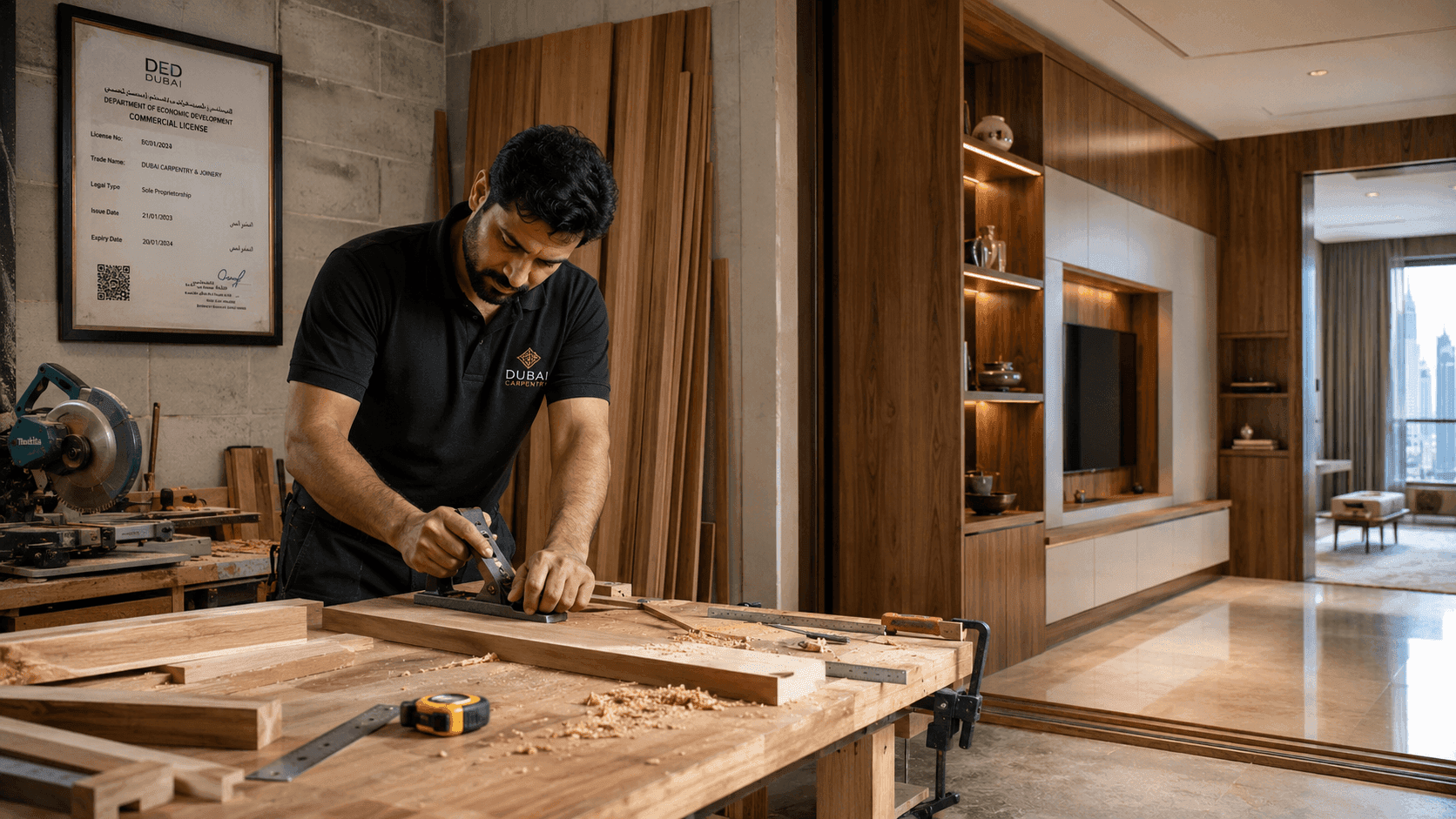
Choosing a carpenter in Dubai starts with the DED trade licence, three recent references and an itemised written quote. Skilled carpentry runs AED 150–350 per hour or AED 1,000–1,500 for a full day, and custom joinery runs AED 5,000–15,000+. Never pay more than 50% upfront.
The cost of hiring the wrong carpenter in Dubai is brutal. A bad quote can run 30–50% higher than fair market rate. A carpenter who disappears mid-project leaves you holding the bill. Worse: unlicensed workers cut corners on structural work, creating safety and compliance problems that cost 5–10× more to fix later.
This guide gives you a screening system to hire the right carpenter — one who delivers on time, within budget, and to code. It's built from real Dubai pricing data, verified credentials, and the red flags that distinguish professionals from amateurs.
Why does choosing the right carpenter matter in Dubai?
Carpentry in Dubai isn't just furniture. The trade covers kitchen and bathroom fit-outs, built-in cupboards, doors, windows, shelving, and interior finishes. A structural or finish error — uneven cuts, poor wood selection, improper fastening in a humid climate — becomes visible and costly immediately. And for fit-out work, Dubai's rules apply: you'll usually need an NOC from your building management, and larger structural fit-outs may need Dubai Municipality or developer approval. An unlicensed carpenter who skips this exposes you to fines and liability.
Carpentry costs in Dubai range from AED 150–350 per hour for skilled professionals, or AED 1,000–1,500 for a full day. A custom joinery project (kitchen cabinets, built-ins) runs AED 5,000–15,000+. Hiring a professional saves money in the long run because their work lasts; hiring cheap wastes your initial investment and creates more expensive problems down the line.
What are the 5 screening criteria for a Dubai carpenter?
Run every Dubai carpenter through these five checks before you make the first call.
What 12 questions should I ask a Dubai carpenter before hiring?
Use this script when vetting candidates. Their answers reveal professionalism, communication, and attention to detail.
- What is your DED trade licence number, and when was it issued? (Write it down; you'll verify it.)
- Have you done work similar to mine before? (Listen for specifics. If vague, red flag.)
- What types of wood do you typically use, and why? (This shows they think about material selection. Dubai's humidity demands wood that doesn't warp.)
- Can you provide a detailed quote that breaks labour and materials separately? (If they can't, they're not organized.)
- What is your hourly rate, daily rate, and estimated project timeline? (Get this in writing.)
- Do you provide a written contract, and what does it cover? (Scope, timeline, payment schedule, warranty, dispute resolution.)
- What happens if the project takes longer than estimated? (Their answer shows how they manage risk and communicate delays.)
- Are you insured, and do you carry liability coverage? (If they damage your property, their insurance should cover it.)
- What warranty do you offer on your work? (Standard is 1–2 years on materials and workmanship.)
- How do you handle changes to scope mid-project? (Their answer shows whether they're flexible and professional.)
- Can I call your references, and when are you available to start? (Confirm availability; never hire someone desperate for work.)
- Do you have experience with Dubai fit-out requirements (building NOC, Municipality approvals)? (Critical for fit-outs and structural work.)
Which credentials and documents should a Dubai carpenter show you?
Before signing any agreement, request and verify these:
- DED trade licence. Verify the licence number through the Dubai Economy & Tourism (DET) licensing service. Confirm the licence is active and the activity covers carpentry or joinery.
- Insurance. Ask whether they carry public liability insurance, and confirm it's current — it's what covers damage to your property during the job.
- Written quote (itemized). Labour, materials, timeline, payment schedule, warranty terms — all in writing.
- Portfolio (digitized). Recent photos of similar work. If you ask for a portfolio and they don't have one, hire someone else.
- Professional references (3+ with contact info). Call them. Ask about timeline, budget adherence, and quality.
- Contract (signed by both). Scope, timeline, payment schedule (typically 30% upfront, 30% at mid-point, 40% on completion), warranty, and dispute resolution clause.
What are the 7 red flags that should stop you hiring a Dubai carpenter?
Any one of these seven signs is enough to end the conversation with a Dubai carpenter.
How much does a carpenter cost in Dubai?
Use this table to sense-check quotes. Prices vary by complexity, materials, and carpenter experience, but these ranges reflect the Dubai market:
💡 What's included in the quote
Always clarify whether the quote includes materials or labour only. Most carpenters quote labour; you source materials separately (or they source at cost + markup). Ask directly: "Does your quote include timber, fasteners, finish, and delivery?" A professional will have this detail prepared. Design is a separate line as well — custom CAD drawings or 3D renderings for a Dubai job typically run AED 500–2,000.
How long does carpentry work take in Dubai?
Carpenter timelines depend heavily on scope and material lead times. Use this framework to evaluate a quoted timeline:
- Simple tasks (assembly, single door/window): 1–3 days
- Custom shelving or small built-in: 5–10 days (depends on material delivery)
- Kitchen or bathroom cabinets: 15–30 days (includes design, fabrication, installation, finishing)
- Multi-room fit-out (kitchen + bathrooms + bedrooms): 4–8 weeks
- Full villa carpentry + finish: 8–16 weeks (depends on scope and approvals)
Critical: Ask about material lead times. If custom timber or imported hardwood is part of your project, delivery can add 2–4 weeks. A professional carpenter should have this baked into their timeline.
How do I compare carpenter quotes in Dubai?
Never hire based on price alone. Use this method to compare 3 quotes fairly:
✅ Checklist: Compare on these dimensions
- Scope clarity. Do all three quotes describe the same work? If not, make them align before comparing.
- Labour + materials breakdown. One quote might bundle labour at AED 200/hr; another might quote AED 150/hr + materials marked up. Separate them to compare apples to apples.
- Timeline & warranty. The cheapest quote might have the longest timeline or shortest warranty. Factor these in.
- Experience level. A junior carpenter will be cheaper than a master carpenter with 20 years of custom work. Is the price difference justified by the complexity of your project?
- Payment terms. One carpenter might want 50% upfront; another 30%. Flexible terms signal confidence.
The hiring decision: If quotes fall within a similar range (within 10–20%), hire based on professionalism, references, and your gut instinct about communication. If one quote is 30% cheaper than others, ask why. If they can't explain it, don't hire them.
FAQ: common hiring questions answered
How far in advance should I contact carpenters?
For simple projects (under 1 week), 2–3 weeks is enough. For custom joinery or multi-room work, give them 4–8 weeks notice so they can plan material sourcing and schedule other projects. During summer (June–August) when many homeowners travel, availability is better.
Should I pay a design fee if the carpenter creates the design?
Most Dubai carpenters include basic design time inside the project quote. If you ask for custom CAD drawings or 3D renderings, that is design-only work and typically costs AED 500–2,000 depending on complexity. Clarify upfront whether the design fee is included or billed separately, and get the answer in the written quote before any drawing starts.
What happens if the project runs over budget?
Your contract should require the carpenter to notify you in writing and get approval before overruns. Typical overruns come from scope changes (you add a shelf mid-project) or material availability delays (timber takes longer to arrive). Have a contingency budget of 10–15% and insist on written change orders before work continues.
Can I hire a carpenter on a daily or hourly basis without a contract?
Hiring a Dubai carpenter by the day or hour without a contract is not recommended. Even for small jobs, a one-page contract stating the scope, timeline, daily rate and payment terms protects both of you. Day rates in Dubai run AED 1,000–1,500 for eight hours, so a single day is already worth putting in writing. WhatsApp agreements are worthless if a dispute arises.
Do I need permits for my carpentry work?
Permits depend on the scope of the work. Routine carpentry — furniture, shelving, a door — needs no permit. Fit-outs in apartments and villas usually need an NOC from your building management, and larger structural work may need Dubai Municipality or developer approval. Your carpenter should know this process; if not, hire one who does — working without required approvals creates fines and liability for you.
What should I do if I'm unhappy with the work?
Your contract should include a warranty period (typically 1–2 years). Immediately document issues with photos and send written notice to the carpenter requesting fixes. If they refuse, escalate the complaint to Dubai Economy & Tourism (DET) or pursue legal action. A signed contract is what makes any of that enforceable.
👉 Find verified carpenters in Dubai →
The bottom line: hire methodically
Choosing a carpenter is a 10-minute screening process that saves you thousands in wasted money and broken projects. Verify the trade licence, check references, ask the 12 questions, sense-check the quote, and always sign a contract. A professional carpenter will have no problem with any of this. If they push back on transparency, they're not the one.
TaskRight is a verified, zero-commission home services platform in the UAE. Every carpenter you are matched with has had their UAE trade licence checked, and they pay no commission on the job — so nothing is padded into your quote to cover a platform fee.
Last updated: August 2026
Prices reflect 2026 averages and may vary by carpenter experience, project complexity, material sourcing, and season.